
What is a Vertical Mixer?
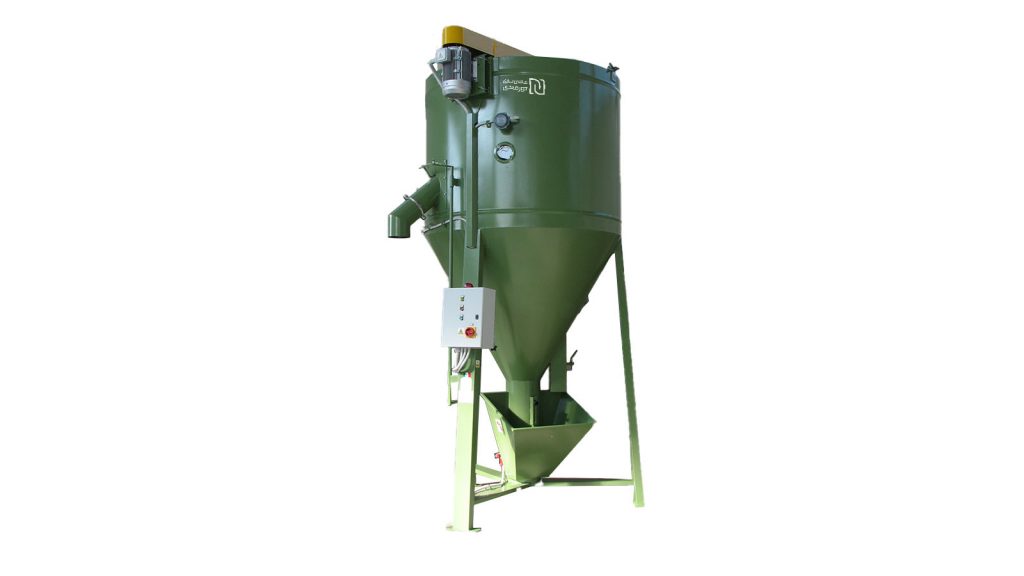
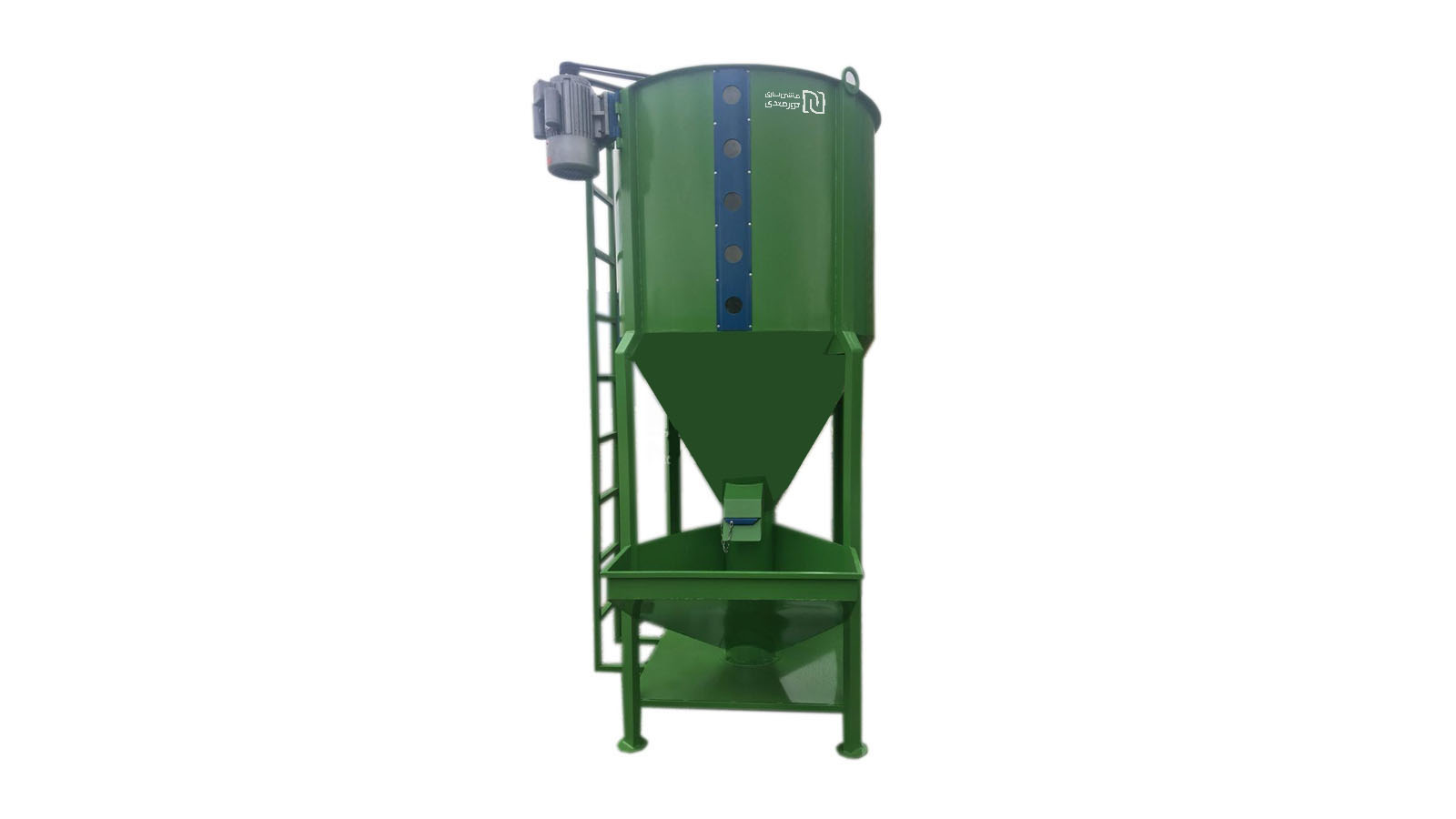
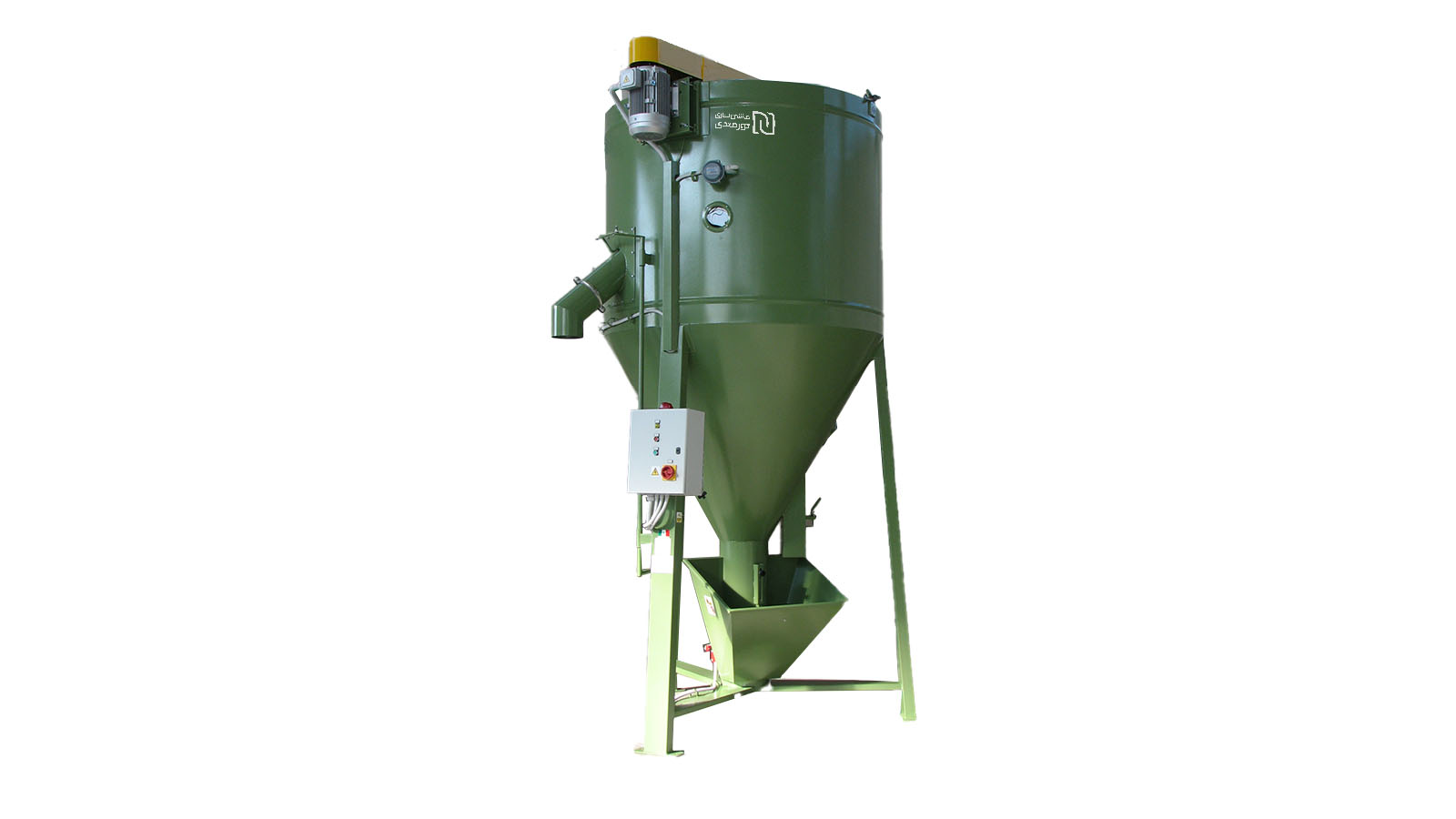
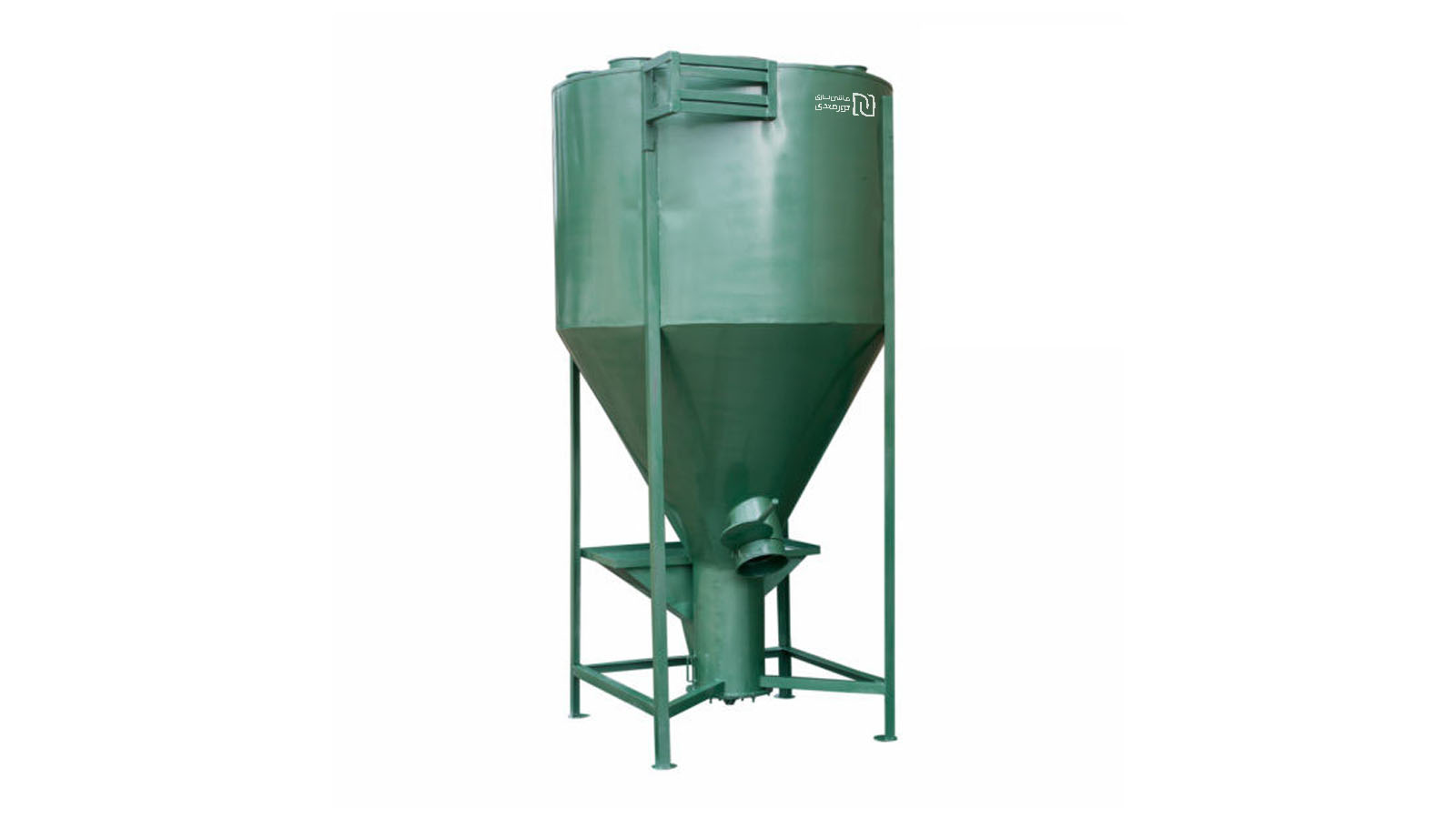
A vertical mixer is designed with a vertical screw in the center of the main tank. Materials are introduced from the bottom and are lifted upwards by the screw. At the top, these materials are then dropped back down by gravity onto the previously introduced materials. This movement causes the materials to rotate and mix together. Vertical mixers have diverse applications across various industries such as chemical, food, paint and pigment, as well as livestock and poultry industries.
This type of mixer is most commonly used in poultry. If you want a mixer that has high-capacity performance, then a vertical mixer will be the perfect choice. Along with this invaluable advantage, the following benefits can also be mentioned:
- Customizable to capacities less than one ton
- Can be equipped with powerful electric motors
- Adjustable for use with single-phase and three-phase electrical systems
- Easy to install and maintain
- Repairs are easy and possible in case of breakdown or wear
Technical Specifications of Vertical Mixers
Vertical mixers are made up of a conical tank, screw chassis, one or more screws depending on the type of machine, electric motor, and shaft. The two models of mixers are above ground and in-ground. In the in-ground model, the mixer is installed below the ground level, but the mixer’s entrance is at ground level. The above ground model has the mixer installed on the level ground, but the entrance is above ground.
Since the flow of solid materials occurs slowly, no separation is caused by gravity or centrifugal force. The mixing time of materials in vertical mixers depends on the number of shafts, shaft rotation speed, and screw speed. Furthermore, some parameters such as particle size and shape, bulk density, and moisture content can affect mixing time.
Why Should Livestock and Poultry Feed Be Mixed?
Feeding livestock and poultry is one of the most significant challenges faced by farmers. Just like humans, animals have their own taste preferences. If a human dislikes some flavor, then animals may avoid that kind of feed. The difference is, human beings may understand that something is good for their health even if the taste is not good. Animals do not have that kind of awareness. So, they need to get that much-needed nutrient some other way.
One of the techniques used is grinding the feed ingredients and combine them with other materials so that the animals consume the nutrients without realizing it. Feed grinders and mixers for livestock and poultry are used for this purpose.
The process works as follows: grains, corn, soybeans, cottonseeds, concentrates, barley, wheat, and other raw materials are ground using a grinder. After grinding, the crushed materials need to be uniformly combined. The uniformity of the feed is crucial to its quality, ensuring that the animals receive all necessary nutrients adequately.
A mixer is needed in order to come up with a homogenous mixture of livestock and poultry feed.
There are different classifications of mixers based on type and application, but they all have one fundamental working principle: the mixing of materials gained from the grinder uniformly.
How the ground materials will be mixed depends on the design and capacity of the livestock and poultry feed mixer.

