
Scraper Bridge
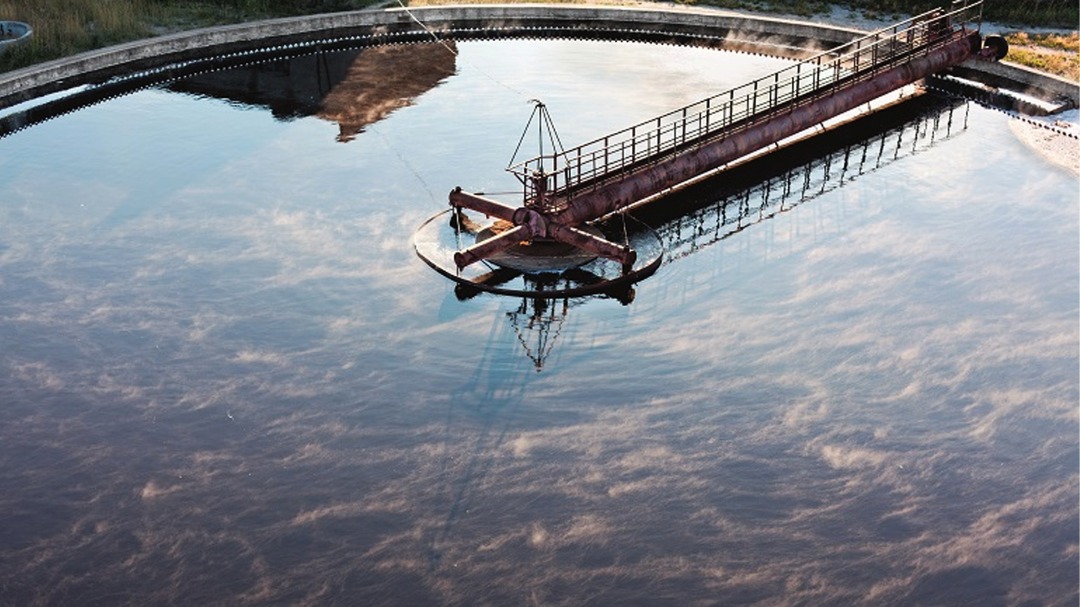
The presence of solid and suspended materials in industrial and sanitary wastewater is one of the main concerns that is addressed through various methods. One effective way to handle this issue is by creating sedimentation basins, where suspended and heavier materials settle at the bottom. Sedimentation is facilitated by various equipment, including clarifiers. After these materials settle, the basin floor needs to be cleaned and the sludge removed using different methods. The scraper bridge is one of the best solutions for this purpose, as it collects and discharges sludge through horizontal or rotational movement, and also separates floating materials from the water surface. The scraper bridge is installed on sedimentation basins, allowing for human operators to move and work on the bridge.
Advantages of the Scraper Bridge:
Simultaneous Grease Removal and Clarification
High-resistance movable bridge
Low Power Consumption
Pre-Aeration of Wastewater
General Explanation
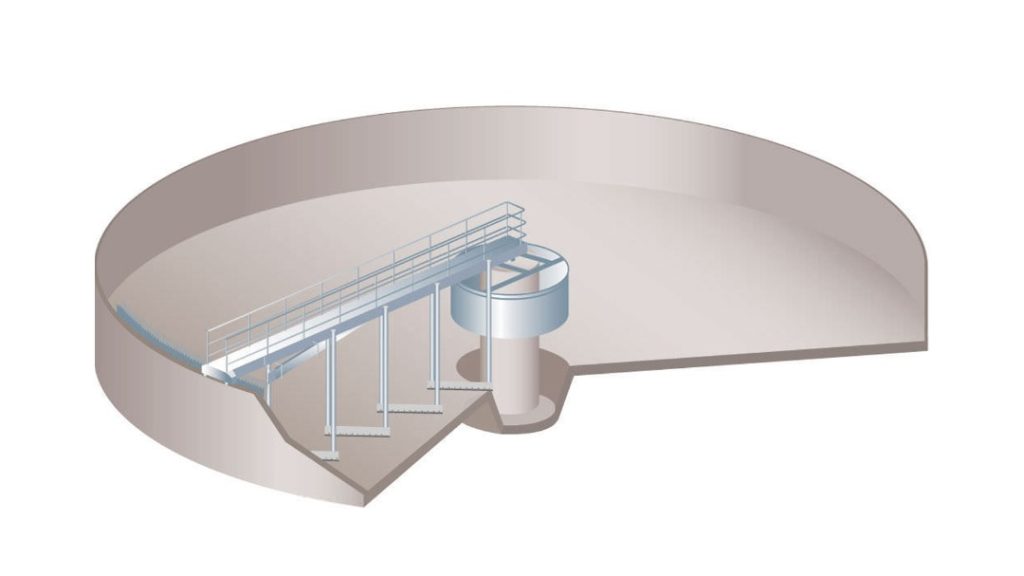
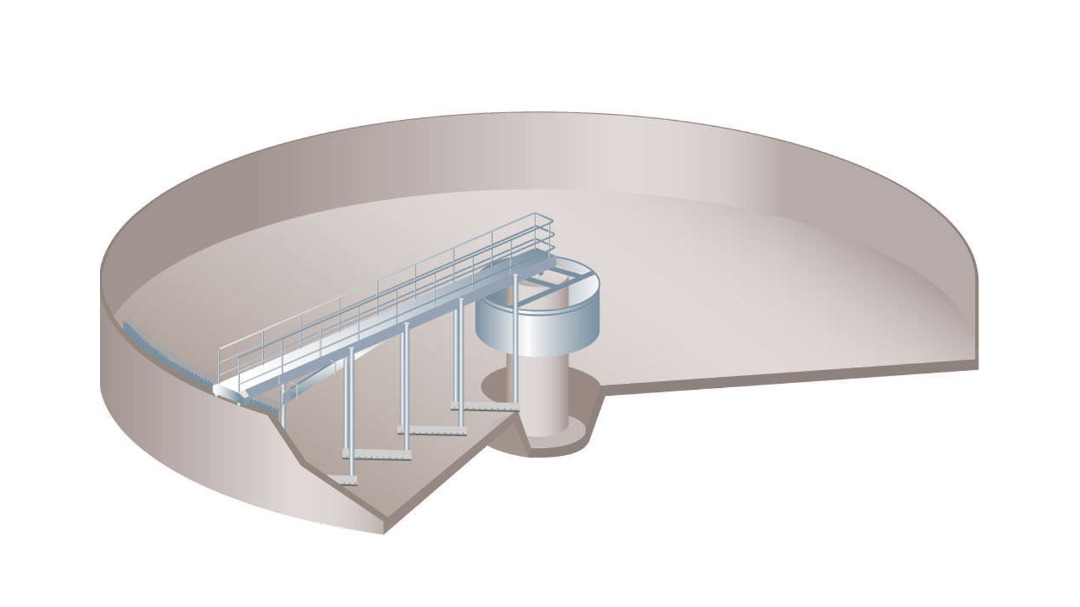
The scraper bridge is generally used on circular sedimentation tanks in urban and industrial wastewater treatment plants to eliminate the sludge collected at the bottom of the sedimentation tank and to separate floating scum from the water surface. The device includes a rotating motor, a rotating bridge, a main scraper, an auxiliary scraper, a central rotating plate, a weir board, and a sludge collection unit. Furthermore, a pipe is connected to the sedimentation tank, allowing water to flow in from the center and exit from the margin.
Operation Summary
The basic principle of primary clarifiers is based on the sedimentation process of wastewater. Insoluble impurities settle at the bottom under the effect of gravitational forces, while lighter and floating materials rise to the surface. The sludge and floating materials are then removed from the sedimentation tank. In summary, the device operates by moving the bridge along the sedimentation basin with the motor, gradually transferring sludge from the edge of the sedimentation basin to the center.
The scraper blade curve follows a logarithmic spiral, guaranteeing uniform force distribution and complete sludge scraping. If there are obstacles at the bottom of the tank, the scraper can automatically release to protect the device from possible damage.
Purpose of Installing the Grit Collector Bridge
Protection of moving parts against wear and premature wear and tear
Lessening of sediment accumulation in pipelines, channels, and conduits
Reducing the frequency of digester cleanings due to excessive accumulation of granular materials.
Specifications
The bridge is made of aluminum or stainless steel, especially the parts submerged in water. This characteristic contributes to a longer lifespan for the structure.
The scraper blades are made of rubber, ensuring complete sludge collection, even from irregular surfaces.
The bottom scrapers in blade-type scrapers are wheel-less, inhibiting entanglement with settled debris and making maintenance easier.
Each suction inlet in suction scrapers is independently adaptable, causing exact sludge removal and better wastewater clarification.
Considering the specifications of this device, it can be concluded that the grit collector bridge is highly sturdy. The drive wheel has a steel frame with an outer coating of wear-resistant rubber, providing high friction and smooth operation. The movable bridge is connected to the central bearing through a pipe, which can diminish the impact of uneven surfaces and other operational errors, thereby improving the bearing stress state.
Product Features
The sludge scraper plate moves along the tank bottom using rubber wheels, providing effective sludge removal.
In addition to the main scraper, an auxiliary scraper is also installed, which ensures the complete functionality of the device.
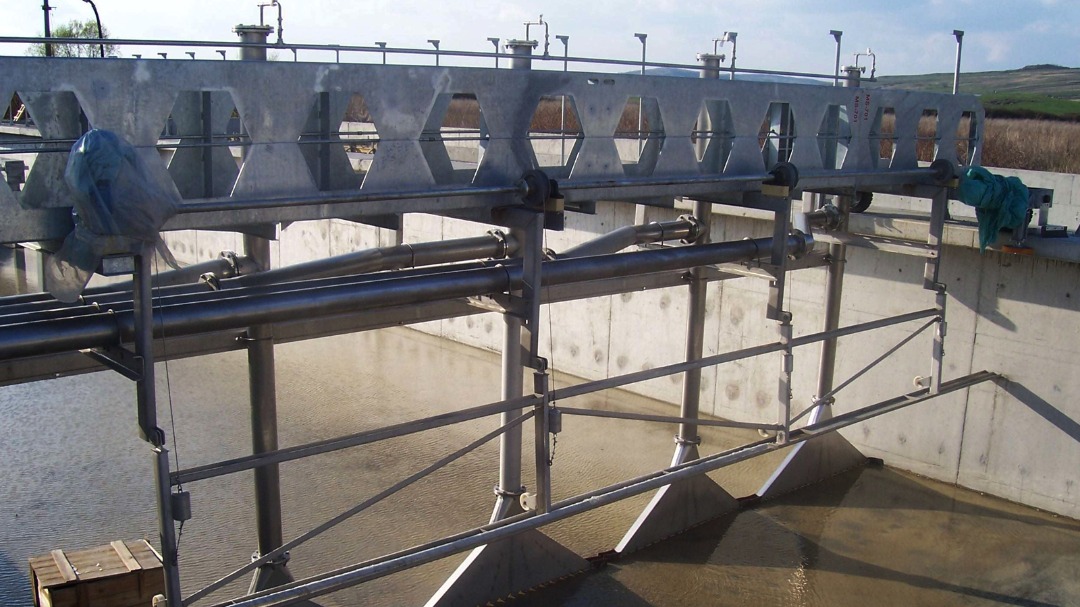
The main bridge features a truss structure, with the bridge floor made of steel mesh panels, providing high strength, light weight, and low energy consumption.
The drive motor, which moves along the tank, has a simple structure and it can be installed easily.
Submerged components are made of stainless steel, while above-water components are galvanized steel, providing perfect resistance to corrosion and long lifespan.

